




Testicular Cancer
Testicular cancer is the most common cancer in men aged 15 to 35, yet it is also one of the most treatable solid tumours in oncology. With appropriate treatment, even advanced-stage testicular cancer can be cured in many patients. For young men across Noida and Delhi NCR noticing a testicular change, prompt evaluation by a best urologic oncologist in Noida is the most important step they can take.
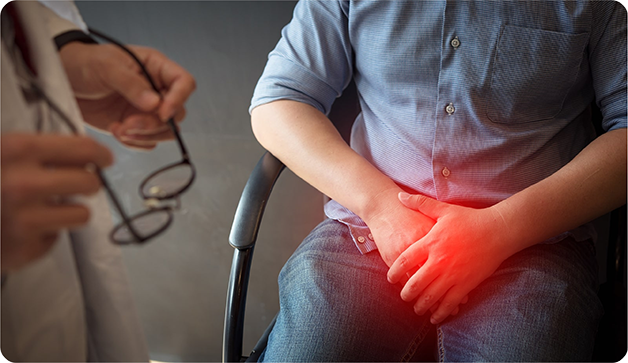


Early Signs of Testicular Cancer
Testicular cancer often presents as a painless lump or swelling within the testicle distinct from epididymo-orchitis, which typically causes pain. Other signs include a feeling of heaviness in the scrotum, a dull ache in the lower abdomen or groin, a sense of fluid accumulation in the scrotum (secondary hydrocele), breast tenderness or enlargement (gynaecomastia) due to hormones produced by certain tumour types, and back pain in advanced disease with retroperitoneal lymph node involvement. After orchidectomy, the remaining testicle should be periodically self-examined and reviewed, as men with testicular cancer have a slightly elevated risk of cancer in the other testicle over time.
At What Age Is Testicular Cancer Most Common?
Testicular cancer predominantly affects younger men — peak incidence occurs between the ages of 15 and 35. A second smaller peak occurs in men over 60. Risk factors include cryptorchidism (undescended testicle) the strongest recognised risk factor a personal or family history of testicular cancer, and certain genetic conditions such as Klinefelter syndrome.
Types of Testicular Cancer
Testicular cancers are broadly divided into germ cell tumours (GCTs) which account for approximately 95% of all cases and non-germ cell tumours.
Germ Cell Tumours (GCTs):
Seminoma: A pure germ cell tumour arising from the germ cells. Accounts for approximately 50% of GCTs. Seminomas grow more slowly, are highly sensitive to radiation and chemotherapy, and are associated with elevated beta-hCG in some cases but not AFP. Seminomas are further classified as classic (typical) and spermatocytic the latter occurring in older men and carrying an excellent prognosis with surgery alone.
Non-Seminomatous Germ Cell Tumours (NSGCTs): More aggressive than seminomas and more likely to present with metastatic disease. Includes:
• Embryonal Carcinoma: The most common component of NSGCTs. Highly aggressive; associated with elevated AFP and beta-hCG.
• Yolk Sac Tumour (Endodermal Sinus Tumour): Produces AFP. The most common testicular tumour in prepubertal boys.
• Choriocarcinoma: The most aggressive germ cell tumour; strongly associated with markedly elevated beta-hCG. Even small primary tumours can metastasise widely via the bloodstream.
• Teratoma: Contains tissue from multiple germ cell layers (ectoderm, mesoderm, endoderm). Mature teratoma is benign in children but malignant in post-pubertal males. Post-chemotherapy residual masses often contain teratoma requiring surgical resection (RPLND).
• Mixed GCT: Contains more than one NSGCT component — the most common presentation of NSGCT.
Non-Germ Cell Tumours (Sex Cord-Stromal Tumours):
• Leydig Cell Tumour: The most common sex cord-stromal tumour. Usually benign; may produce excess testosterone or oestrogen. Treated with organ-sparing surgery where possible.
• Sertoli Cell Tumour: Rare; most are benign but malignant variants exist.
Secondary Testicular Tumours: Lymphoma is the most common secondary testicular tumour in men over 50. It is treated with lymphoma protocols, not testicular cancer protocols.
Tumour marker profiles — AFP, beta-hCG and LDH — are critical for diagnosis, staging (S classification), treatment monitoring and detecting recurrence.
Treatment Options
Surgery (Radical Orchidectomy): The first step in both diagnosis and treatment is surgical removal of the affected testicle through an inguinal (groin) incision — radical inguinal orchidectomy. Scrotal approaches are avoided to prevent disruption of the lymphatic drainage pattern.
Surveillance: For stage I seminoma after orchidectomy, active surveillance with interval imaging and tumour markers is a well-accepted management strategy, avoiding radiation or chemotherapy in patients with low risk of relapse.
Radiation Therapy: Stage I or stage II seminoma may be treated with para-aortic lymph node radiation following orchidectomy.
Chemotherapy: BEP (bleomycin, etoposide and cisplatin) is the established chemotherapy regimen for both seminoma and NSGCT with nodal or metastatic disease.
Is Fertility Affected After Treatment?
Testicular cancer fertility treatment considerations are an important part of pre-treatment counselling. Orchidectomy of one testicle generally does not eliminate fertility if the remaining testicle functions normally. However, retroperitoneal lymph node dissection (RPLND — surgery to remove lymph nodes at the back of the abdomen) can affect ejaculation, and chemotherapy may temporarily or permanently reduce sperm production. Sperm banking before starting chemotherapy is strongly recommended for all men of reproductive age and should be discussed at the initial consultation.
